Our ecosystem
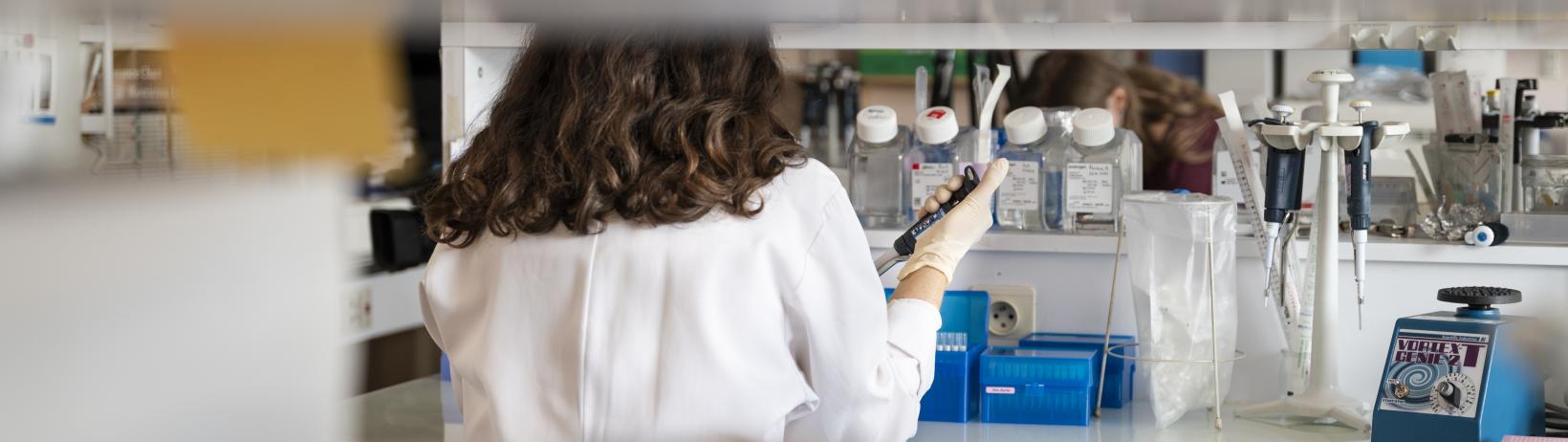
The MarMaRa institute relies on more than 30 research teams within 13 laboratories and connects around 200 people from Aix Marseille Université, the Centrale Méditerranée School, the INSERM (French national institute for health and medical research), the CNRS and the AP-HM.
Learn more about the Research units
- Bio-cultural anthropology, law, ethics and health (ADES)
- Wassim El Nemer team: Genetics, Red Cells, Biotherapy (GENGLOBE)
- Pierre Le Coz team: Body, Norms, Health
- Centre for study and research on health services and quality of life (CEReSS)
- Laurent Boyer, Julie Berbis & Sami Hraiech
- Centre for cardiovascular and nutrition research (C2VN)
- Nathalie Lalevée team: Dysimmunity and inflammation during cardiovascular damages
- Pierre-Emmanuel Morange team: Thrombosis, platelets and vascular diseases
- Marseille centre for cancer research (CRCM)
- Stéphane Coulon team: Telomeres & Chromatin
- Christophe Lachaud team: DNA interstrand crosslink lesions and blood disorder
- Marseille institute for developmental biology (IBDM)
- Laurent Fasano team: Transcriptional regulatory networks in development and diseases
- Bianca Habermann team: Computational biology
- Françoise Helmbacher team: Development and pathologies of neuromuscular circuits
- Robert Kelly team: Genetic control of heart development
- Mediterranean institute for neurobiology (INMED)
- Carlos Cardoso team: Molecular basis and physiopathology of cortical development disorders
- Françoise Muscatelli team: Early life imprinting and neurodevelopmental disorders
- Marseille Medical Genetics (MMG)
- Anne Barlier & Heather Etchevers team: Mechanisms of Paracrine and Endocrine Disorders (MOPED)
- Marc Bartoli team: Translational neuromyology
- Anaïs Baudot team: Systems biomedicine
- Paul Villoutreix group: Single-Cell Heterogeneity Exploration via MAchine learning and interference methods (SCHEMA)
- Fabienne Lescroart: Normal and pathophysiological specification of cardio-pharyngeal mesoderm
- Frédérique Magdinier team: Epigenetics, chromatin and disease modeling
- Patrice Roll & Ali Badache group: Epigenetics and nucleoskeleton dynamics in rare diseases 'Premature Aging Syndromes'
- Leslie Caron group: Modeling muscular dystropjhies using patients' hIPSCs to explore physiopathology and therapeutic options
- Stefano Testa group: Epigenetics, chromatin and disease modeling
- Mickael Mitchell group: Spermatogenesis and genome stability
- Francesca Rochais team: Heart development and cardiac generation
- Laurent Villard team: Human neurogenetics
- Stéphane Zaffran team: Genetics of cardiac diseases
- Theories and approaches to genomic complexity (TAGC)
- Benoit Ballester group: Regulatory bioinformatics
- Christine Brun group: Network biology
- Christophe Chevillard group: Genetic landscape and cardiomyopathies
- Aïtor Gonzalez group: Bioinformatics of gene regulatory sequences and variants
- Sandrine Marquet group: Genetics and functional genomics of human malaria
- Lydie Pradel group: Genetics and functional genomics of complex diseases such as sepsis, malaria and T-cell acute lymphoblastic leukemia
- Denis Puthier group: Bioinformatics of transcriptional regulation in T-cells
- Pascal Rihet group: Malaria& sepsis tEAM
- Salvatore Spicuglia: Functional genomics of normal development and leukemia
- Marseille institute for mathematics (I2M)
- PI: Elisabeth Remy - Mathematics & Algorithmic for Systems Biology (MABioS)
- Institute for research into non-equilibrium phenomena (IRPHE)
- PI: Valérie Deplano - Biomechanics team
- Fresnel institute
- PIs: Sophie Brasselet and Manos Mavrakis - Mosaïc group
- Mechanics and acoustics laboratory (LMA)
- PI: Serge Mensah group - Waves and imaging team
- Laboratory for plasma lasers and photonic processes (LP3)
- PIs: Patricia Alloncle and Adrien Casanova - Laser plasma and photonic Processes (LP3)
Our research initiatives
The MarMaRa institute proposes a number of actions to help researchers, teacher-researchers, engineers, post-doctoral students, PhD students and its laboratories. These include:
- Support for mobility (call for mission projects): attendance at scientific events, inter-laboratory collaborations
- Strengthening collaboration between the institute’s laboratories (incentive action)
- Funding for junior researchers (call for postdoctoral projects) and PhD students (call for end-of-thesis projects)
- Initiation of interdisciplinary working groups
Areas of research
Our areas of research and associated expertises: genomics, pathophysiology, bioinformatics...
Calls for projects and offers
Calls for projects and other opportunities, awardee catalogue, current and future initiatives...
News
Events, current calls for projects, life at the Institute...
For a deeper dive
Testimonials
With funding from the Institute, we have set up a strategy to generate cell models to assess whether genetic and telomere instabilities are present in patients with rare encephalopathies caused by UFMylation deficiency. Depending on future results, we may consider applying for national funding.